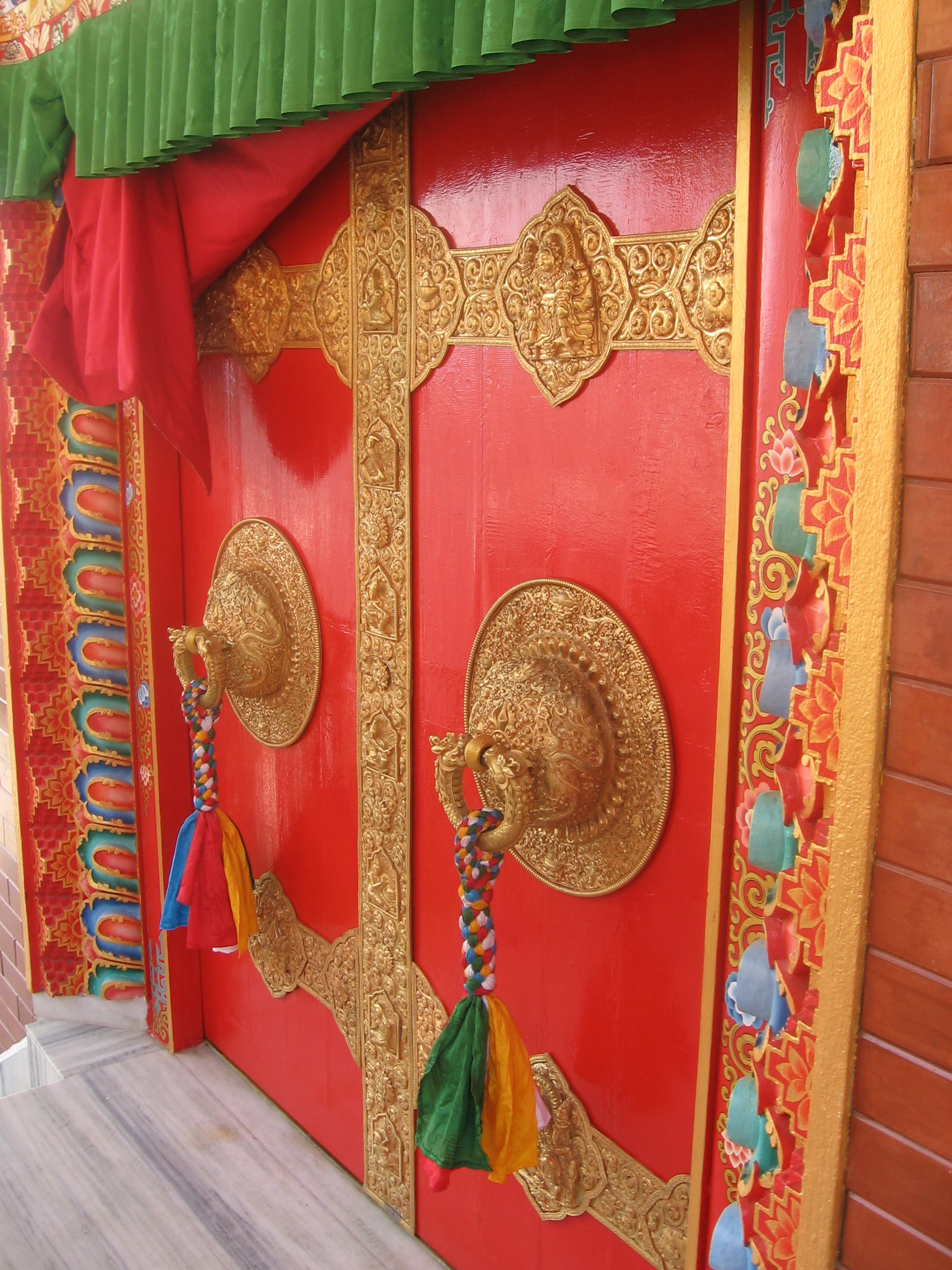
The shrine is a focal point of meditation and provides a means of accumulating merit through the generosity of making offerings. There are many profound teachings on the nature of offerings, but the essential point is to make offerings with supreme generosity. Such generosity creates a foundation of nonattachment and open awareness that increases the accumulations of both merit and pristine awareness. When making an offering, it is essential to be immersed in the action and to maintain a sense of the presence of the buddhas, bodhisattvas, enlightened masters of the lineage, and deities of practice.
Shrines sometimes contain elaborate offerings representing all beautiful and precious objects worthy of being offered. A home shrine can be simple but should be as well made and dignified as possible. There are no requirements for its width or depth, but it should be tall enough so that the surface is no lower than the level of your heart when you are seated in meditation. If your shrine is in your bedroom, it should not be placed at the foot of your bed or lower than your bed.
The shrine should have an image of Buddha Shakyamuni (a statue, photograph, or painting) and seven water-offering bowls set out in front in a straight line and spaced evenly. It can include a copy of a dharma textwrapped in a nice cloth, also placed in the center. Images of deities should not be placed on top of this text. Other items, such as photographs and statues of deities and lineage teachers, as well as fresh flowers, may also be placed on the shrine. There should be a pair of candles, either wax or battery operated. You may also offer incense to the shrine. Traditionally an incense container is a vessel that has a base and is filled with sand, placed in front of the shrine either on the floor or on a small, low table.
It’s considered respectful to use your right hand when touching objects on the shrine and to use both hands when offering anything to the shrine, lighting candles or incense, and so on. When handling statues, always hold them by the base rather than by the head or torso. Avoid blowing on the objects on the shrine: to extinguish candles, matches, or incense, wave your hand or use a candle snuffer.
Open your shrine each morning by filling the seven water bowls from left to right. Fill them generously and equally, using the same water you use for drinking. Arrange them evenly, with a gap between them the length of a rice grain. Light the candles. Holding a stick of incense in both hands, light it from a candle on the shrine.
In the evening, close the shrine by emptying the water from the offering bowls from right to left into a specially designated container. Offer the water outside in a place where no one will walk on it, tossing it upward rather than pouring it onto the ground. Dry the bowls and place them upside down on the shrine until the next morning, with a matchstick underneath each one.
An alternative to closing the shrine at night is changing the offering water in the morning. After emptying the bowls and before refilling them, wipe them out with a cloth to keep them clean. Cleaning the shrine is traditionally done on full moon and new moon days. It is important to keep the shrine as clean as possible.